Behind the Wheel and Beneath the Surface
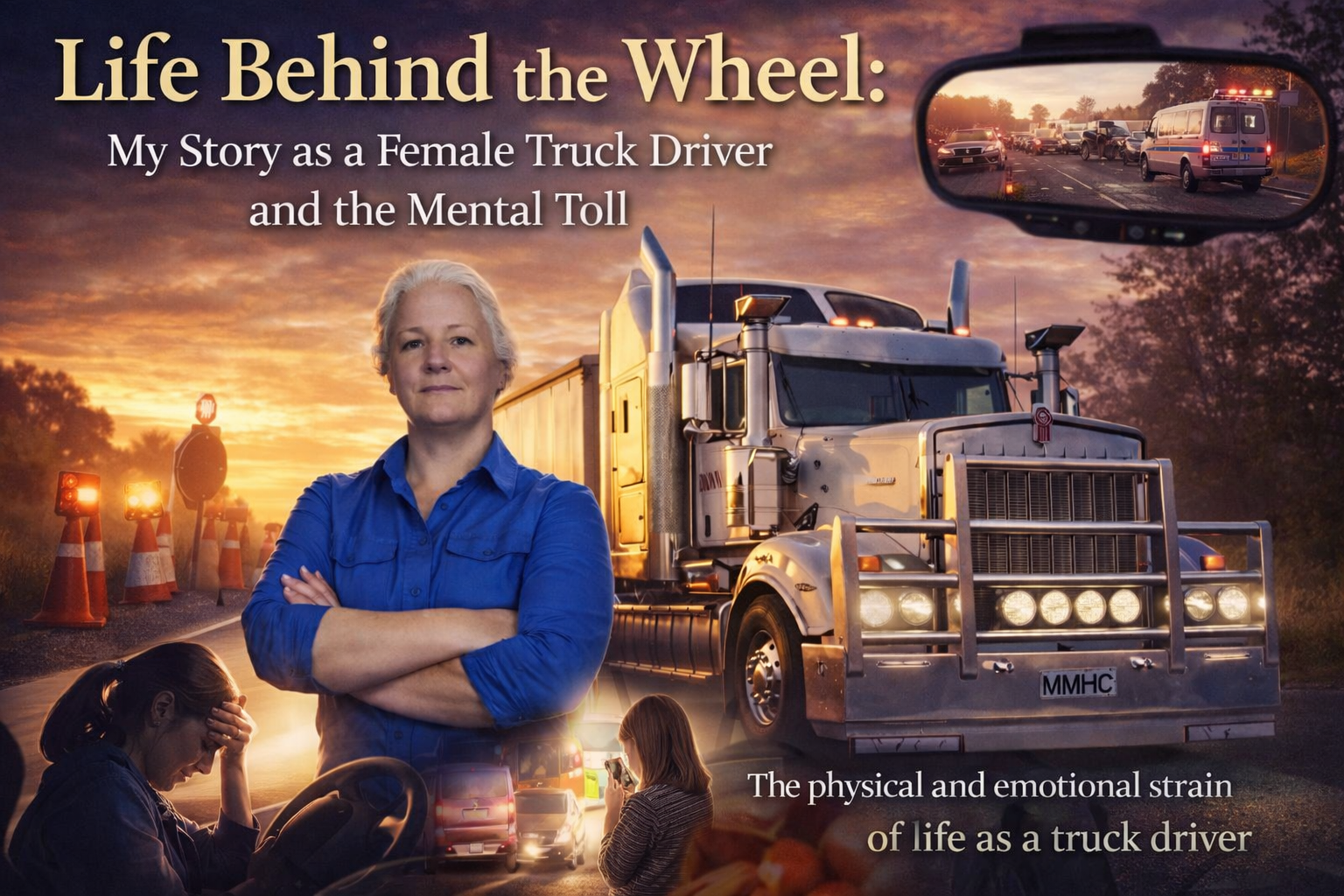
Life Behind the Wheel. My Story as a Female Truck Driver and the Mental Toll
There is no such thing as a normal workday for me. Some days start at 2am. Other days start in the evening. There has never been a nine to five rhythm. These irregular hours take a toll on the body, especially when two in the morning is when your body wants to be asleep, not getting up.
Getting up at that hour is hard, but the hardest time is first light. Dawn is when the body really fights you. Everything in you wants to sleep, but you cannot. The product has to get to the mill, the silos, or the ship. If you miss your time slot, you can be sitting for hours waiting for another one, often stuck in long lineups just to unload.
What makes it harder is knowing you have to turn straight around and be back at the load point by a set time to make sure you get the next load.
Weather adds another layer. On days where it is forty five degrees, sitting around or unloading in direct sun offers no relief. The heat makes everything more physically demanding and draining.
On top of that, there are the rules and regulations that govern every part of the day. Trying to fit the job around them is mentally taxing. Then there is traffic, road conditions, and the lack of facilities. Often there is nowhere suitable for trucks to stop, even on major highways.
Another layer is home. I have two special needs boys, and life does not stop just because I am on the road. I am still making sure they are cared for, that their needs are met, that schools and supports are managed. Some days I am on the phone for hours helping them through their issues while still driving and working. Some days I get home. Other days I do not get home until the weekend. Sometimes my work week starts on the weekend. It is a constant juggling act.
Some days the emotional strain of holding all of this is overwhelming. You ask yourself why. But I love what I do, and I ask myself, if not this, then what.
There is also the emotional and mental toll of what you see on the roads. Other road users not paying attention. Near misses. People not understanding that trucks need more space and cannot stop like cars can. The frustration of watching dangerous decisions made in front of you, knowing the consequences could be devastating, puts a heavy emotional strain on you.
Then there are the crashes and the aftermath you come across. Things you never thought would affect you mentally, but they do. You wish you had never seen some of it. You wish people would slow down, look around, use their mirrors, and respect vehicles that are bigger and heavier than them. The cost of rushing is often borne by someone else.
All of this does not just take a mental toll. It takes a toll on the nervous system. Some days, when you finally stop, you can feel that your nervous system is running flat.
Physical Demands
There is no one physically demanding part of the job that stands above the rest. They all take their toll.
Lack of sleep. Heat. Sitting for long hours. Limited facilities. Loading and unloading when required. Lack of recovery time.
It is the constant combination of all of these that wears the body down over time.
Being Alone on the Road
When I am out on the open road, there are times where it feels relaxing. Seeing stunning country. Sunrises and sunsets. Driving at night. Those moments can quiet the mind.
At the same time, my mind is often racing. Thinking about work. Timing. Where I need to be. Navigating new areas and cities, especially Melbourne. Watching other vehicles and worrying about what they might do. Driving defensively, especially in heavy traffic. Thinking about safety, mine and everyone else’s, keeping the truck upright, and making sure the load does not shift.
My mind is also often at home. Worrying if everything is alright with the kids. Being on the phone for hours helping them through issues. Dealing with schools and the people involved in their care. Even when I am driving, I am still parenting.
Then there are times when my mind wanders into what if thinking. Running through scenarios. Going down rabbit holes that are hard to stop once they start.
Pressure and Responsibility
There are times where I have felt pressured not to show weakness. That pressure comes from many different places. Fellow drivers. Colleagues. Employers. Delivery sites. It is part of the environment.
There have also been times where I felt emotionally overloaded and still had to keep driving.
Emotional and Mental Toll
Over time, long haul and extended driving has impacted my mental health.
It has shown up as difficulty switching off, constant worrying, and increased stress.
The emotions that show up most often on the road are frustration, and at times anger.
I have noticed changes in my nervous system. Being on edge. Taking longer to shut down. Feeling tense even when I am not driving.
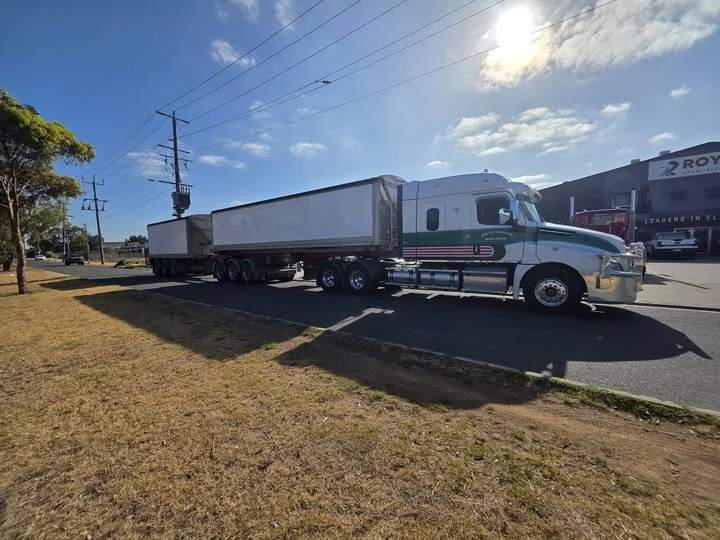
My Truck
Being a Woman in a Male Dominated Industry
The extra emotional labour that comes with being a female truck driver includes isolation and a lack of connection and support due to the male dominated nature of the industry. While some men have been supportive and friendly, the overall experience can still feel isolating.
There is also family guilt, and guilt placed on me by others who believe I should be at home, being a housewife and caring for the kids full time.
Yes, I have felt the need to be tougher, quieter, or more agreeable in order to survive and fit in.
There is a lack of understanding around my capability and knowledge. I am often underestimated. There is also a lack of basic respect in being shown how to do things, being taught properly, or even simply being spoken to.
The Cost and the Unspoken Parts
This job has cost me deeply through self doubt.
I have doubted my ability, doubted my decisions, questioned whether I am good enough, felt the need to constantly prove myself, and second guessed myself more than I should have had to.
To survive at times, I had to hide my authentic self.
The realisation that this was affecting me came when I bought my own trucks and started running my own transport business. That was when I decided I needed to be authentically myself and stop caring about what others thought of me or what they believed I could or could not do.
The Turning Point
What made me pay more attention to my mental health and nervous system was attending training to complete my Clinical Hypnotherapy Diploma and attending the Australian Hypnosis Conference, which I am involved in each year.
Listening to speakers and connecting with colleagues made me realise that what I was teaching others, I needed to step back and do for myself. That became the turning point where I chose to genuinely prioritise my own mental health and nervous system first and foremost.
Support from fellow hypnotherapist colleagues played an important role during this shift.
Reach out to me for sessions. I know what it is like and can help support you https://www.meganmorrishypnotherapy.com.au/about